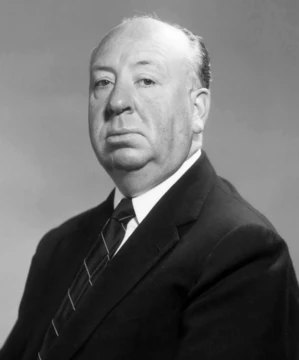
Stan Brakhage
American experimental filmmaker known for hand-painted and silent films.

Photograph by Friedl Kubelka . Though the photo was not attributed in the Filmex · Public domain
He is considered one of the most important figures in 20th-century experimental film, creating a large and diverse body of work over five decades that explored handheld camerawork, painting directly onto celluloid, fast cutting, in-camera editing, scratching on film, collage film, and multiple exposures. His films are often noted for their expressiveness and lyricism, and many are now archived and readily available on modern home media.
- field
- Experimental filmmaking
- nationality
- American
- known_for
- Hand-painted film, handheld camerawork, fast cutting, in-camera editing, scratch
Verified Timeline
Lore & Background
Brakhage spent the next few years in near poverty, depressed about what he saw as the failure of his work, and briefly considered suicide. He taught at the University of Colorado in Boulder off and on in the late 1970s and early 1980s. In the late 1980s, he returned to making sound films with th
Reader's Guide
Stan Brakhage is a central figure in 20th-century experimental film, known for a vast and varied body of work that pushed the boundaries of cinematic form. His films, mostly silent, explore universal themes of birth, mortality, sexuality, and innocence, often using techniques such as painting directly onto celluloid, fast cutting, and multiple exposures. Though his early films were met with derision, by the early 1960s he began receiving recognition, including awards from Film Culture. Brakhage's work, once obscure and hard to find, is now archived and widely available on modern home media, ensuring his legacy as a pioneer of avant-garde filmmaking.
Did You Know?
- Brakhage was born Robert Sanders and was adopted and renamed three weeks after his birth by Ludwig and Clara Brakhage.
- He completed his first film, Interim, at age 19.
- Brakhage stated that if there was one filmmaker he owed the most to for the crucial development of his own filmmaking, it was Marie Menken.
- Martin Scorsese used Brakhage's painted film style in The Last Temptation of Christ.
From Still Images to Cinematic Mastery
Stanley Kubrick's path from behind a still camera to the director's chair was neither sudden nor conventional. After earning a living as a staff photographer for Look magazine in the late 1940s and early 1950s, he transitioned into narrative filmmaking with The Killing in 1956, his first major Hollywood production. The following years brought two high-profile collaborations with actor Kirk Douglas—the anti-war drama Paths of Glory and the sweeping historical epic Spartacus—before Kubrick relocated to England in 1961. There, working with Peter Sellers, he delivered the comedy-drama Lolita and the biting Cold War satire Dr. Strangelove. His career then accelerated through landmark projects spanning science fiction, horror, and military drama, culminating in Eyes Wide Shut in 1999. A defining voice of the New Hollywood era, Kubrick moved fluidly across genres while maintaining a signature blend of meticulous craftsmanship, inventive visual language, and sardonic humor that set his work apart from virtually any other director of his generation.
The Architecture of Control
Kubrick's filmmaking process was defined by an almost obsessive need to govern every creative decision himself. He developed hands-on expertise in screenwriting, editing, color grading, marketing, and even the theatrical exhibition of his finished works. On set, this translated into a reputation for demanding dozens of retakes on a single shot, a practice that left many actors bewildered and exhausted. His research into historical, scientific, and technical details was exhaustive, and his staging of scenes reflected a level of precision rarely seen in commercial cinema. In 1978, he and his wife Christiane established their base at Childwickbury Manor in England, where he centralized the writing, research, editing, and overall management of each production under one roof. This arrangement granted him near-total artistic authority while still benefiting from the financial backing of major Hollywood studios—a combination that was, by the standards of the industry, exceedingly rare.
Landmarks and Controversy
Several of Kubrick's films crossed into the realm of the unprecedented. 2001: A Space Odyssey (1968) introduced a level of scientific accuracy and groundbreaking special effects that had no real precedent in cinema, earning him his sole Academy Award for Best Visual Effects and securing its place among the most celebrated films ever produced. The Shining (1980) marked one of the earliest uses of the Steadicam to achieve long, smooth tracking sequences, a technique he would later deploy to powerful effect in the Vietnam War drama Full Metal Jacket (1987). Though many of his releases initially drew mixed or hostile reviews, the majority earned nominations at the Academy Awards, Golden Globes, or BAFTAs, and nearly all have since undergone substantial critical re-evaluation, cementing their status as enduring landmarks of the medium.
A Boy in the Bronx
Stanley Kubrick entered the world on July 26, 1928, at a Manhattan hospital, the first child of Jacob "Jack" Kubrick, a homeopathic physician, and his wife Sadie "Gert." Growing up in the Bronx, the family enjoyed a comfortable standard of living. Though his parents married in a Jewish ceremony, Stanley was not raised with religious observance. At school he was bright but disengaged, spending more time in local cinemas than in classrooms. His father introduced him to chess at age twelve, a pastime that would follow him into adulthood and even appear within his films; Kubrick credited the game with teaching him patience and discipline. At thirteen, Jack purchased a Graflex camera, igniting a passion for still photography that Stanley pursued alongside a neighbor who shared a darkroom. The work of street photographer Weegee left a lasting imprint, and Kubrick would later hire Fellig for a production. Jazz music and a brief stint as a drummer also occupied his teenage years before high school and the world of cinema consumed him entirely.
Gallery
More in Auteur Directors 1-24
Elsewhere in the Auteur Directors universe
Spotted an error? Know more?
This is a living reference — every entry is fact-audited, and reader corrections feed straight into our audit queue. Suggest an edit · See this site's audit record