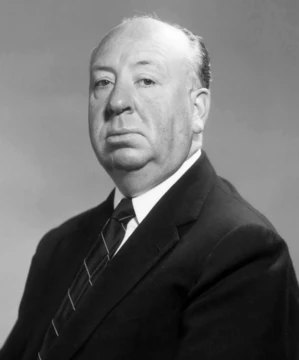
Terrence Malick
American filmmaker known for philosophical, visually striking films.

Terrence Frederick Malick (born November 30, 1943) is an American filmmaker who began his career as part of the New Hollywood generation. He has received numerous accolades, including the Palme d'Or and the Golden Bear, in addition to nominations for three Academy Awards, a Golden Globe Award, a DGA Award, and a WGA Award. Malick's films explore themes such as transcendence and conflicts between reason and instinct, typically with broad philosophical and spiritual overtones and meditative voice-overs by their characters. His style has polarized scholars and audiences; many praise his films for their lavish cinematography and aesthetics, but others fault them for lacking plot and character development. His work has nonetheless ranked highly in retrospective decade-end and all-time polls.
- born
- November 30, 1943
- field
- Filmmaker
- nationality
- American
- known_for
- Badlands (1973), Days of Heaven (1978), The Thin Red Line (1998), The Tree of Li
Verified Timeline
Lore & Background
Malick was born in Ottawa, Illinois, to Irene and Emil A. Malick, a geologist. His paternal grandparents were of Assyrian descent from Urmia, while his mother was an Irish Catholic. He attended St. Stephen's Episcopal School in Austin, Texas, while his family lived in Bartlesville, Oklahoma. Malick had two younger brothers, Chris and Larry. Larry Malick was a guitarist who went to study in Spain with Andrés Segovia in the late 1960s. In 1968, Larry intentionally broke his own hands due to pressure over his musical studies. Their father Emil went to Spain to help Larry, but his son died shortly after, possibly by suicide. The early death of Malick's younger brother has been explored and referenced in his films The Tree of Life (2011) and Knight of Cups (2015). Malick graduated from Harvard College in 1965 with a Bachelor of Arts, summa cum laude, and was elected to Phi Beta Kappa. He received a Rhodes Scholarship, which he used to study philosophy at Oxford University's Magdalen College. After a disagreement with his advisor, Gilbert Ryle, over Malick's thesis on the concept of world in Kierkegaard, Heidegger, and Wittgenstein, Malick left Oxford without a degree. In 1969, Northwestern University Press published Malick's translation of Heidegger's Vom Wesen des Grundes as The Essence of Reasons. After returning to the United States, Malick taught philosophy at the Massachusetts Institute of Technology while freelancing as a journalist. He wrote articles for Newsweek, The New Yorker, and Life. Malick started his film career after earning an MFA from the brand-new AFI Conservatory in 1969, directing the short film Lanton Mills. He wrote early uncredited drafts of Dirty Harry (1971) and Drive, He Said (1971), and is credited with the screenplay for Pocket Money (1972). Malick also co-wrote The Gravy Train (1974) under the pseudonym David Whitney. His first feature-length work as a director was Badlands (1973), an independent film starring Martin Sheen and Sissy Spacek as a young couple on a crime spree in the 1950s Midwest, influenced by the crimes of convicted teenage spree killer Charles Starkweather. Malick raised half the budget by approaching people outside of the industry, including doctors and dentists, and by contributing $25,000 from his personal savings. The rest was raised by executive producer Edward R. Pressman. After a troubled production that included many crew members leaving halfway through, Badlands drew raves upon its premiere at the New York Film Festival. As a result, Warner Bros. bought distribution rights for three times its budget. Malick's second film was the Paramount-produced Days of Heaven (1978), about a love triangle in the Texas Panhandle in the early 20th century. Production began in the fall of 1976 in Alberta, Canada. The film was mostly shot during the golden hour, with primarily natural light. Much like Malick's first feature, Days of Heaven had a lengthy and troubled production, with several members of the production crew quitting before shooting was finished, mainly due to disagreements with Malick's idiosyncratic directorial style. Billy Weber and Malick spent two years editing it, during which they experimented with unconventional editing and voice-over techniques. Days of Heaven won the Academy Award for Best Cinematography and the prize for Best Director at the 1979 Cannes Film Festival. Following its release, Malick moved to Paris and disappeared from public view for years. During this time, he wrote a number of screenplays, including The English Speaker, about Josef Breuer's analysis of Anna O.; adaptations of Walker Percy's novel The Moviegoer and Larry McMurtry's The Desert Rose; a script about the parallel lives of singer Jerry Lee Lewis and pastor Jerry Falwell; and a stage adaptation of the Japanese film Sansho the Bailiff that was to be directed by Polish filmmaker Andrzej Wajda, in addition to continuing work on the Q script. Q was not made, but Malick's work on the project provided material for The Tree of Life and eventually became the basis for Voyage of Time. Malick returned to directing in 1997 with The Thin Red Line, a loose adaptation of James Jones's World War II novel, featuring a large ensemble cast including Sean Penn, Adrien Brody, Jim Caviezel, Nick Nolte, Ben Chaplin, Elias Koteas, Woody Harrelson, George Clooney, and John Travolta. Filming took place predominantly in the Daintree Rainforest in Queensland, Australia and in the Solomon Islands. The film received critical acclaim, was nominated for seven Academy Awards, and won the Golden Bear at the 49th Berlin International Film Festival. He later directed The New World (2005), based on the story of John Smith and Pocahontas in the Virginia Colony. Over one million feet of film were shot, and three different cuts of varying length were released. The Tree of Life (2011), starring Brad Pitt, Jessica Chastain, and Sean Penn, won the Cannes Film Festival's Palme d'Or and earned Malick another Academy Award nomination for Best Director. After The Tree of Life, Malick's directorial output in the 2010s became more consistent and experimental with To the Wonder (2013), Knight of Cups (2015), Song to Song (2017), and A Hidden Life (2019). During this time he also directed the documentary film Voyage of Time (2016) about the birth and death of the universe. Malick has frequently collaborated with Emmanuel Lubezki, who served as the director of photography on five of his films.
Reader's Guide
Terrence Malick's significance lies in his distinctive filmmaking style, which blends philosophical and spiritual themes with meditative voice-overs and visually striking cinematography. His work has polarized scholars and audiences: many praise his films for their lavish aesthetics, while others fault them for lacking plot and character development. Despite this, his films have ranked highly in retrospective decade-end and all-time polls. Malick's career is notable for a 20-year hiatus between Days of Heaven and The Thin Red Line, during which he lived in Paris and worked on various projects. His films often explore transcendence and conflicts between reason and instinct, with broad philosophical and spiritual overtones. His legacy includes earning critical acclaim for works like The Tree of Life, which won the Palme d'Or, and The Thin Red Line, which won the Golden Bear. Malick's use of natural light and unconventional editing techniques, as seen in Days of Heaven, has been widely praised, and his collaboration with cinematographer Emmanuel Lubezki on five films has been a hallmark of his later work.
Did You Know?
- Malick contributed $25,000 from his personal savings to help fund his first feature, Badlands.
- Days of Heaven was shot mostly during the golden hour with primarily natural light, and Malick and Billy Weber spent two years editing it.
- Malick left Oxford University without a degree after a disagreement with his advisor, Gilbert Ryle, over his thesis on Kierkegaard, Heidegger, and Wittgenstein.
- Over one million feet of film were shot for The New World, and three different cuts of varying length were released.
- Malick's younger brother Larry, a guitarist, intentionally broke his own hands in 1968 due to pressure over his musical studies and died shortly after, possibly by suicide.
More in Auteur Directors 1-24
Elsewhere in the Auteur Directors universe
Spotted an error? Know more?
This is a living reference — every entry is fact-audited, and reader corrections feed straight into our audit queue. Suggest an edit · See this site's audit record