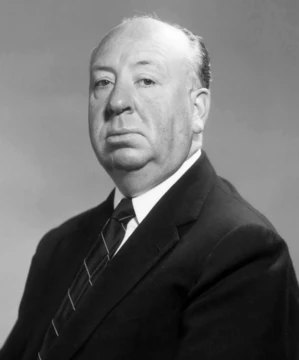
Stanley Kramer
Reliable journeyman director known for big-budget tentpole films and true crime dramas.

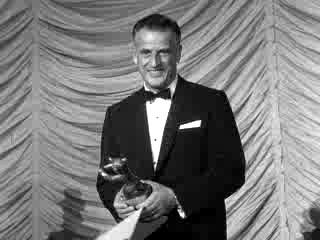
Self (Cathlec) · Public domain
Richard Owen Fleischer (December 8, 1916 – March 25, 2006) was an American film director whose career spanned more than four decades, from the Golden Age of Hollywood in the 1940s through the New Hollywood era until the late 1980s. He was the son of animation pioneer Max Fleischer and served as chairman of Fleischer Studios. Noted for his versatility, Fleischer was popular among producers and studios, earning a reputation as a reliable journeyman. Though not considered an auteur or highly acclaimed artist in his lifetime, many of his films proved very financially and critically successful, winning accolades and being some of the highest-grossing features of their respective release years.
- born
- December 8, 1916
- died
- March 25, 2006
- field
- Film director
- nationality
- American
Verified Timeline
Lore & Background
Fleischer began his career in the B department of RKO Pictures, mainly directing noirs and crime dramas like The Narrow Margin (1952). RKO's owner Howard Hughes was impressed by The Narrow Margin and hired Fleischer to re-write and re-shoot the majority of His Kind of Woman (1952) after being dissatisfied with the original cut. Fleischer was chosen by Walt Disney – his father's former rival as a cartoon producer – to direct 20,000 Leagues Under the Sea (1954) starring Kirk Douglas. While in post-production, he had to turn down an offer from Dore Schary at MGM to direct Bad Day at Black Rock because of the work still required on Leagues. Fleischer signed a long-term contract with 20th Century Fox after the success of Violent Saturday (1955). At Fox, he made Compulsion (1959), which earned him a Directors Guild Award nomination. He moved to Paris where Darryl F. Zanuck asked him to make films starring Juliette Gréco, including Crack in the Mirror (1960) and The Big Gamble (1961). Fleischer then signed a contract with Dino De Laurentiis to make Barabbas (1961). Back in Hollywood, Richard Zanuck offered him Fantastic Voyage (1966), which revived his career. He was entrusted with Fox's big 'roadshow' musical Doctor Dolittle (1967), which failed to break even. Tora! Tora! Tora! (1970) was his last film for 20th Century Fox.
Reader's Guide
Fleischer is best known for his big-budget 'tentpole' films and star vehicles, including 20,000 Leagues Under the Sea (1954), The Vikings (1958), Barabbas (1961), Fantastic Voyage (1966), Doctor Dolittle (1967), Tora! Tora! Tora! (1970), Soylent Green (1973), Mandingo (1975), and the Robert E. Howard sword-and-sorcery films Conan the Destroyer (1984) and Red Sonja (1985). He is also known for his informal series of true crime films: The Girl in the Red Velvet Swing (1955), based on the Nesbit-Thaw scandal; Compulsion (1959), based on the Leopold and Loeb trial; The Boston Strangler (1968), based on the early 1960s serial killer; and 10 Rillington Place (1971), based on John Christie. Early in his career, he directed the Oscar-winning documentary Design for Death (1947). Throughout his career, Fleischer earned a reputation as a reliable journeyman and 'replacement director,' filling in when a project's original director was fired. He replaced John Huston on The Last Run (1971), Richard Sarafian on Ashanti (1979), and Sidney J. Furie on The Jazz Singer (1980). His skill at managing large studio budgets and star vehicles was noted, with critic Georges Sadoul writing: 'His work, though of varied quality, has been largely underestimated, perhaps because he had to work under the thumb of such highly individualistic producers as Stanley Kramer, Walt Disney, and Darry F. Zanuck. His virtuosity and skill are evident in The Vikings and even in 20,000 Leagues Under the Sea, despite their large budgets.'
Did You Know?
- Fleischer won an Academy Award as producer of the 1947 documentary Design for Death, co-written by Theodor Geisel (later known as Dr. Seuss).
- He was the son of animation pioneer Max Fleischer and served as chairman of Fleischer Studios, which handles licensing of Betty Boop and Koko the Clown.
- Fleischer's 1993 autobiography is titled Just Tell Me When to Cry, describing his many difficulties with actors, writers and producers.
- He replaced John Huston on The Last Run (1971) after Huston fell out with star George C. Scott.
- Fleischer directed the Robert E. Howard sword-and-sorcery films Conan the Destroyer (1984) and Red Sonja (1985), both starring Arnold Schwarzenegger.
The Son of an Animation Pioneer
Richard Owen Fleischer entered the world on December 8, 1916, in Brooklyn, New York, into a Jewish household shaped by his father Max Fleischer, the animation pioneer originally from Kraków (then Austria, now Poland). Growing up in the shadow of a man who had built an entire animation studio empire, Richard nonetheless carved his own path through the live-action world of cinema. He graduated from Brown University before attending Yale School of Drama, where he met the woman who would become his wife, Mary Dickson. Like many of his generation, he served in the U.S. Army during World War II, and his professional life at RKO Pictures began in 1942 with shorts, documentaries, and his self-described "Flicker Flashbacks" — compilations of forgotten silent-era features. His early breakthrough came as producer of the 1947 documentary Design for Death, co-written by Theodor Geisel (better known decades later as Dr. Seuss), which earned him an Academy Award. He also served as chairman of his father's Fleischer Studios, bridging two very different worlds of American filmmaking.
Grinding Through the B-Movie Years
Fleischer's first feature, Child of Divorce (1946), a vehicle for Sharyn Moffett, proved a hit at RKO, but the follow-up Banjo flopped. Undeterred, he was loaned out to Stanley Kramer and Carl Foreman to direct So This Is New York (1948) for Columbia, then returned to RKO for the Foreman-penned thriller The Clay Pigeon. What followed was a string of taut, lean film noirs — Bodyguard (1948), Follow Me Quietly (1949), Armored Car Robbery (1950), and The Narrow Margin (1952) — during which Fleischer constantly lobbied his studio for a shot at bigger, A-picture assignments. Several opportunities slipped away, including a project Norman Krasna and Jerry Wald hoped he could build from footage shot for It's All True, and a vehicle for Al Jolson. His persistence finally paid off when Howard Hughes, RKO's owner, was so impressed by The Narrow Margin that he handed Fleischer the task of rewriting and reshooting most of His Kind of Woman (1952) after being dissatisfied with John Farrow's original cut. Hughes's satisfaction led him to approve Fleischer's loan to Kramer for The Happy Time (1952), a film that launched the next phase of his career.
Tentpoles, Stars, and a Career Spanning Eras
Once Fleischer broke into A-pictures, he never looked back. Walt Disney — his father Max's former rival as a cartoon producer — hand-picked him to helm 20,000 Leagues Under the Sea (1954) with Kirk Douglas, a landmark that set the tone for decades to come. A successful thriller, Violent Saturday (1955), earned him a long-term deal at 20th Century Fox, where he would spend the next fifteen years. But his range stretched far beyond any single studio: he directed The Vikings (1958) for Douglas's independent Brynaprod, Compulsion (1959) with Orson Welles, Barabbas (1961) for Dino De Laurentiis, and later Fantastic Voyage (1966), Doctor Dolittle (1967), Tora! Tora! Tora! (1970), Soylent Green (1973), and Mandingo (1975). His career, spanning from the Golden Age through New Hollywood to the late 1980s, culminated in the sword-and-sorcery spectacles Conan the Destroyer (1984) and Red Sonja (1985), both built on Robert E. Howard's characters. Across science fiction, biblical epic, war drama, and fantasy, Fleischer proved he could deliver on the biggest scale Hollywood offered.
The True-Crime Thread and the Journeyman's Reputation
Running quietly through Fleischer's filmography is a striking thread of true-crime dramas that never quite formed a formal series but share a common DNA. The Girl in the Red Velvet Swing (1955) dramatized the Nesbit-Thaw scandal; Compulsion (1959) revisited the Leopold and Loeb trial; The Boston Strangler (1968) tackled the early-1960s serial killer; and 10 Rillington Place (1971) brought John Christie's crimes to the screen. These films sit alongside his tentpoles as evidence of a director who could shift registers effortlessly. In the broader industry, Fleischer was never celebrated as an auteur or a highly acclaimed artist during his lifetime. Instead, producers and studios prized him as a dependable, versatile journeyman — someone who could be trusted to deliver a polished, marketable picture across any genre. That reputation, paradoxically, made him one of the most consistently successful working directors of his era, with numerous titles ranking among the highest-grossing features of their release years and earning critical accolades along the way.
Gallery
More in Auteur Directors 1-24
Elsewhere in the Auteur Directors universe
Spotted an error? Know more?
This is a living reference — every entry is fact-audited, and reader corrections feed straight into our audit queue. Suggest an edit · See this site's audit record