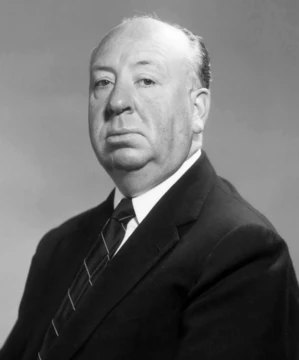
Yu Hyun-mok
South Korean director of Obaltan, repeatedly voted best Korean film.

Yu's dedication to the intellectual side of film and his interest in using film to deal with social and political issues led him to have difficulties both with box-office-oriented producers and with Korea's military government during the 1960s and 1970s.
- born
- July 2, 1925, Sariwon, Korea, Empire of Japan (now in North Korea)
- field
- Film director, teacher, animation producer
- nationality
- South Korean
Verified Timeline
Lore & Background
Yu Hyun-mok was born in Sariwon, Korea, Empire of Japan (now in North Korea) on July 2, 1925.
Reader's Guide
His career was marked by tensions with both commercial producers and the military government due to his intellectual approach and focus on social and political issues.
Did You Know?
- Yu Hyun-mok's 1961 film Obaltan has repeatedly been voted the best Korean film of all time in local critics' polls.
- He produced Kim Cheong-gi's 1976 animated film Robot Taekwon V, contributing to Korean animation.
- A retrospective of his career was held at the 4th Pusan International Film Festival in 1999.
- He received the Order of Cultural Merit (Gold Crown, 1st Class) from the Korean government in 2009.
Early Life and the Roots of a Resistance Artist
Na Woon-gyu was born on October 27, 1902, the third son of Na Hyong-gwon, a Joseon-era military officer turned teacher in Hoeryong, Hamgyongbuk-do. In high school he discovered theater and acting, but his passions quickly turned political. He participated in the March 1, 1919 anti-occupation protest, and to avoid imprisonment he spent two years crossing and recrossing the Duman River into Manchuria, eventually reaching Siberia to work alongside Korean Liberation fighters. Back in Seoul by 1921, he enrolled at Yonhui University (now Yonsei) to study social science, and it was then that cinema seized his attention. He filled notebooks with observations from theater screenings and carried a hand mirror everywhere to drill facial expressions. His political involvement led to his arrest; imprisoned in Chongjin from 1921 to 1923, he received the pen name Chunsa from fellow resistance fighter Lee Chun-song. After release he joined the Yerimhoe Play Troupe in Hoeryong, then sold all his books to buy a train ticket to Busan. There he applied to the Choson Film Company, working first as an extra and villain before debuting in the 1925 film UnYeongJeon.
Arirang and the Auteur Tradition
Though often described as short with a toad-like face that made him a natural for peasant roles, Na Woon-gyu possessed a screen presence defined by raw anger and frustration that resonated deeply with a colonized audience. He first gained public recognition playing the father in Lee Kyong-son's 1925 film Simchong-jon. His true breakthrough came with Arirang (1926), the first project in which he simultaneously wrote, directed, and starred. Under Japanese colonial censorship, scripts required approval from the occupying government, and open criticism was suppressed, pushing most Korean films into the sentimental shinpa melodrama format. Na's innovation was to embed nationalist sentiment within that very style, using metaphor to voice opposition to the occupation. Arirang became a national sensation and transformed Korean cinema from mere entertainment into a medium of collective resistance. With financing from Park Sung-pil of Dansongsa Theater, Na founded his own production company in September 1927 in Changsin-dong near Dongdaemun, explicitly aiming to make films by Koreans, for Koreans, in contrast to the Japanese-controlled studios. Because he wrote, directed, and performed in his own work, he is often credited with inaugurating the auteur tradition in Korean filmmaking.
Ambition, Censorship, and a Truncated Career
Na's 1929 epic Salangeul chajaseo employed over a thousand extras and drew on his own experience of crossing the Duman River in search of freedom. The film was initially banned by authorities and only released after heavy editing. The commercial failure of his next project, Beongeoli Sam-ryong, also from 1929, forced the closure of his studio. The nationalist film wave that Arirang had ignited in 1926 lasted until roughly 1930, when Japanese suppressive measures intensified. The Korean press began criticizing the shallow shinpa tear-jerkers that had replaced politically engaged storytelling, and some of Na's own later work drew similar rebuke. In 1931, his shinpa film Geumganghan featured a Japanese woman as his romantic interest; film historian Yu Hyun-mok noted that audiences perceived this as a betrayal, and it dealt a severe blow to his career. The physical toll of his earlier imprisonment and the torture he endured left him in poor health for the rest of his life. He died of tuberculosis in 1937 at the age of 34 (36 by Korean reckoning). Despite the brevity of his working years, he remains the most prolific filmmaker of Korea's Golden Age of Silent Films, having acted in twenty-six pictures and directed fifteen in roughly a decade.
A Legacy That Outlived the Occupation
Allegations that Na collaborated with Japanese authorities never seriously dented his standing as a founding figure of Korean cinema. His funeral procession was led by a band playing Arirang, and large mourning crowds gathered despite the rain. In November 1938, the newspaper Chosun Ilbo ran an audience poll for the best silent Korean films; Arirang topped the list, while Na's Sarangul Chajaso and Punguna (1926) also placed in the top ten. His final film, Omongnyo (1937), ranked second among Korean sound films. His life was dramatized in the 1966 film Na Woon-Gyui ilsaeng, directed by and starring Choi Mu-ryong, father of actor Choi Min-soo. The Korea Film Directors' Society honored him by naming its Chunsa Art Film Festival, launched in 1990, after his prison pen name. In Seoul, the area near Arirang Hill was redeveloped into a Street of Motion Pictures, home to the Arirang Cine Center, an information library, a themed movie-set attraction, a monument marking the centenary of his birth, and an annual film festival. He influenced director Shin Sang-ok, and his story was fictionalized in Ed Park's novel Same Bed Different Dreams.
Frequently Asked Questions
Who is Yu Hyun-mok?
Yu Hyun-mok was a South Korean film director, teacher, and animation producer born in 1925 in Sariwon. He is most widely recognized for his socially engaged filmmaking and his landmark 1961 feature Obaltan.
Why is Obaltan regarded as the greatest Korean film ever made?
Obaltan has been selected as the top Korean film of all time in multiple local critics' polls, a distinction no other title has matched. It remains Yu Hyun-mok's signature achievement and a defining work of Korean cinema.
What caused Yu Hyun-mok's conflicts with producers and the state?
His insistence on treating film as a medium for intellectual inquiry and political commentary clashed with the commercial expectations of studio producers and drew the hostility of Korea's military government during the 1960s and 1970s. That tension between artistic conviction and institutional pressure defined much of his working life.
When was Yu Hyun-mok born and how did he die?
He was born on July 2, 1925, in Sariwon, then under Japanese colonial rule and now part of North Korea. He died on June 28, 2009, after suffering a stroke.
What set Yu Hyun-mok apart as an auteur in Korean film history?
He consistently prioritized thematic depth and social critique over box-office formulas, making him a rare conscience-driven figure in an industry that largely catered to commercial demands. His willingness to challenge both the studio system and the political establishment cemented his legacy as a filmmaker of principle.
More in Auteur Directors 25-36
Elsewhere in the Auteur Directors universe
Spotted an error? Know more?
This is a living reference — every entry is fact-audited, and reader corrections feed straight into our audit queue. Suggest an edit · See this site's audit record