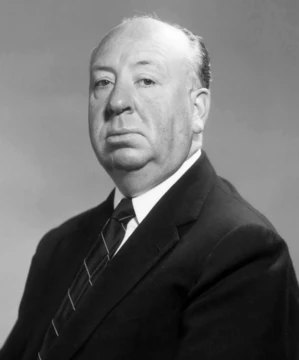
Éric Rohmer
Last established French New Wave director and *Cahiers* editor.

Éric Rohmer was a French film director, film critic, journalist, novelist, screenwriter, and teacher. He was the last of the post-World War II French New Wave directors to become established. He edited the influential film journal *Cahiers du cinéma* from 1957 to 1963, while most of his colleagues—among them Jean-Luc Godard and François Truffaut—were making the transition from critics to filmmakers and gaining international attention. Rohmer gained international acclaim around 1969 when his film *My Night at Maud's* was nominated at the Academy Awards. He won the San Sebastián International Film Festival with *Claire's Knee* in 1971 and the Golden Lion at the Venice Film Festival for *The Green Ray* in 1986. In 2001, Rohmer received the Venice Film Festival's Career Golden Lion.
- born
- 21 March 1920
- died
- 11 January 2010
- field
- Film director, film critic, journalist, novelist, screenwriter, teacher
- nationality
- French
- known_for
- French New Wave, Six Moral Tales, editing Cahiers du cinéma
Verified Timeline
Lore & Background
Rohmer was born Jean-Marie Maurice Schérer (or Maurice Henri Joseph Schérer) in Nancy (also listed as Tulle), France. He was a Catholic and secretive about his private life, often giving different dates of birth to reporters. He fashioned his pseudonym from the names of Erich von Stroheim and Sax Rohmer. Educated in Paris, he received an advanced degree in history and also studied literature, philosophy, and theology. Rohmer first worked as a teacher in Clermont-Ferrand before moving to Paris as a freelance journalist. In 1946 he published a novel, *Elisabeth* (AKA *Les Vacances*) under the pen name Gilbert Cordier. In 1950 he co-founded the short-lived film magazine *La Gazette du Cinéma* with Jacques Rivette and Jean-Luc Godard. He joined *Cahiers du cinéma* in 1951 and became its editor in 1956. He co-wrote the earliest book-length study of Alfred Hitchcock with Claude Chabrol in 1957, which focused on Hitchcock's Catholic background and has been called 'one of the most influential film books since the Second World War.' Rohmer resigned from *Cahiers* in 1963. His film career gained momentum with the Six Moral Tales cycle, beginning with *The Bakery Girl of Monceau* (1963). He co-founded the production company Les Films du Losange in 1962 with Barbet Schroeder. Rohmer gained international acclaim around 1969 when *My Night at Maud's* was nominated at the Academy Awards. He won the San Sebastián International Film Festival with *Claire's Knee* in 1971 and the Golden Lion at the Venice Film Festival for *The Green Ray* in 1986.
Reader's Guide
Rohmer's significance lies in his role as a key figure of the French New Wave and his long, durable career. He edited *Cahiers du cinéma* during a formative period and co-wrote a foundational study of Alfred Hitchcock that helped establish auteur theory. His Six Moral Tales series explored variations on a single narrative theme—a man committed to one woman tempted by another—focusing on characters' internal analysis rather than action. Rohmer was known as more politically conservative than most *Cahiers* staff and resigned when his views diverged from the magazine's leftward shift. He made 14 shorts for French television between 1964 and 1966, which he said taught him how to make 'readable images.' After his death, his obituary in *The Daily Telegraph* called him 'the most durable filmmaker of the French New Wave,' outlasting his peers and still making movies the public wanted to see late in his career. He received the Venice Film Festival's Career Golden Lion in 2001.
Did You Know?
- Rohmer fashioned his pseudonym from the names of actor/director Erich von Stroheim and writer Sax Rohmer, author of the Fu Manchu series.
- He co-wrote the earliest book-length study of Alfred Hitchcock with Claude Chabrol in 1957, focusing on Hitchcock's Catholic background.
- Rohmer first published articles under his real name but began using 'Éric Rohmer' in 1955 so his family would not find out he was involved in film.
- He made 14 shorts for French television between 1964 and 1966, which he said taught him how to make 'readable images.'
- Rohmer's obituary in *The Daily Telegraph* called him 'the most durable filmmaker of the French New Wave.'
Frequently Asked Questions
Who is Éric Rohmer?
Éric Rohmer (1920–2010) was a French filmmaker, novelist, and critic who became the final major figure to emerge from the post-war French New Wave. He also worked as a journalist, screenwriter, and teacher throughout his career.
What are Éric Rohmer's most famous films?
His most celebrated body of work is the Six Moral Tales cycle, a series of intimate dramas exploring the decisions and ethical dilemmas of ordinary people. These films are widely regarded as his signature contribution to cinema.
What is the Six Moral Tales?
The Six Moral Tales is a cycle of six feature-length films in which Rohmer examines the small choices and moral reasoning of his characters in everyday situations. The series is considered the centerpiece of his filmmaking career.
How did Éric Rohmer connect to the French New Wave?
Rohmer was one of the last directors of the French New Wave to achieve full recognition, and he served as editor of the influential journal Cahiers du cinéma between 1957 and 1963. His critical work in that publication helped shape the movement's theoretical foundations.
Why is Éric Rohmer important in film history?
Rohmer is important because he bridged the worlds of literary criticism and filmmaking, producing dialogue-driven dramas that treated cinema as a medium for exploring philosophy and human nature. His dual legacy as a Cahiers editor and as a director of the Six Moral Tales cemented his place in the New Wave canon.
More in Auteur Directors 25-36
Elsewhere in the Auteur Directors universe
Spotted an error? Know more?
This is a living reference — every entry is fact-audited, and reader corrections feed straight into our audit queue. Suggest an edit · See this site's audit record