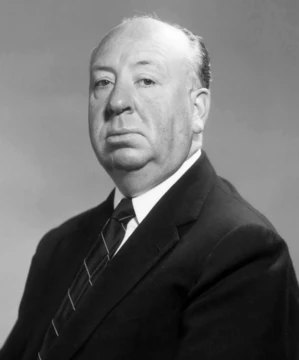
Zheng Junli
Chinese actor and director of classic films, persecuted during the Cultural Revolution.
Zheng Junli (December 6, 1911 – April 23, 1969) was a Chinese actor and director who rose to prominence during the golden age of Chinese cinema. Born in Shanghai to a poor family of Cantonese fruit-sellers, he developed an early passion for reading and the performing arts. In 1928, he studied drama under the progressive dramatists Tian Han and Ouyang Yuqian at the Nanguo she drama school. During the 1930s, he acted for the Lianhua Film Company, playing roles such as the love interest Yu Haichou in *New Women* opposite Ruan Lingyu, and became one of Shanghai’s biggest stars. His 1941 film *Long Live the Nations* was the first Chinese propaganda film aimed at fostering solidarity among ethnic minorities in border regions, produced through the Kuomintang-controlled China Motion Picture Studio. After the Sino-Japanese War, he focused on directing. His 1947 film *The Spring River Flows East* (co-directed with Cai Chusheng) and his anti-Kuomintang polemic *Crows and Sparrows* (1948) are considered classics; the latter received a first-class award from the PRC Ministry of Culture in 1957. Zheng welcomed the CCP government and initially benefited, moving his family to a prime Shanghai residence. He made *The Married Couple* after Mao Zedong warned cadres about “sugar-coated bullets,” but the film was banned before release. He supported *The Life of Wu Xun*, which was harshly criticized, and felt guilty. He later worked on a film about Song Jingshi, a peasant rebel who surrendered to the Qing, but the compromise depiction of surrender led to a short release and eventual ban. His subsequent biographical films on Nie Er and Lin Zexu were well-received. Zheng was a delegate to the Shanghai People’s Congress and a member of several film associations. He translated Richard Boleslavsky’s *Acting: The First Six Lessons* and introduced Stanislavski’s system to China, co-translating *An Actor Prepares*. He also authored *Art History of World’s Movies*, a pioneering work comparing Western and Soviet films. He was severely persecuted during the Cultural Revolution and died in prison in 1969.
- field
- Actor, director, film theorist
- nationality
- Chinese
- known_for
- Classic films *The Spring River Flows East* and *Crows and Sparrows*; introducing Stanislavski's performing system to China
Lore & Background
Zheng Junli was a Chinese actor and director, born in Shanghai in 1911 to a poor family of Cantonese fruit-sellers. From a young age, he demonstrated a strong interest in reading and the performing arts. In 1928, he studied under the progressive dramatists Tian Han and Ouyang Yuqian at the Nanguo she drama school. During the 1930s, he acted for the Lianhua Film Company, playing roles such as the love-interest Yu Haichou in *New Women* opposite Ruan Lingyu, and by the mid-1930s had become one of the biggest stars in Shanghai cinema. His 1941 film *Long Live the Nations* was the first Chinese propaganda film aimed at fostering solidarity among ethnic minorities in border regions, produced through the Kuomintang-controlled China Motion Picture Studio. After the Sino-Japanese War, he focused on directing, co-directing the classic *The Spring River Flows East* (1947) and the anti-Kuomintang film *Crows and Sparrows* (1948), which later won a first-class award from the PRC Ministry of Culture. He welcomed the establishment of the Communist government and initially benefited, moving his family from a dilapidated dormitory to a prime residential area opposite Soong Ching-ling. Following a directive from Mao Zedong, he made the film *The Married Couple*, about a cadre abandoning his village wife for a city woman, but it was banned before release. He supported the making of *The Life of Wu Xun*, which was severely criticized, and later felt guilty. His subsequent biographical films on Nie Er and Lin Zexu won acclaim. He was a delegate to the Shanghai Municipal People’s Congress and a member of several film and playwright associations. Devoted to film theory, he translated Richard Boleslavsky’s *Acting: The First Six Lessons* using dictionaries, despite poor English, and introduced Constantin Stanislavski’s system to China, co-translating *An Actor Prepares*. He authored *Art History of World’s Movies*, a groundbreaking chronicle of world cinema from a universal perspective. He was severely persecuted during the Cultural Revolution and died in prison in 1969.
Reader's Guide
Zheng Junli's significance lies in his dual role as a major figure in the golden age of Chinese cinema and as a pioneering film theorist. His theoretical contributions were substantial—he was the first to introduce Stanislavski's system to China and wrote a world film history from a universal perspective at a time of ideological rigidity. His persecution and death in prison during the Cultural Revolution mark him as a victim of that period. His legacy includes both his artistic achievements and his role in shaping Chinese film theory and practice.
Did You Know?
- Zheng Junli was born into a poor family of Cantonese fruit-sellers in Shanghai.
- He was the first Chinese filmmaker to introduce Constantin Stanislavski's performing system into China.
- His film *The Married Couple* was banned even before public release.
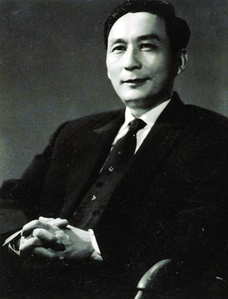
Gallery
Frequently Asked Questions
Who is Zheng Junli?
Zheng Junli was a Shanghai-born Chinese filmmaker and stage performer who became one of the defining creative voices of the 1940s–50s era of Chinese movie production. He worked in front of the camera, behind it, and also wrote about film theory.
What are Zheng Junli's most famous films?
His two most celebrated works, *The Spring River Flows East* and *Crows and Sparrows*, are routinely cited as landmark achievements in the history of Chinese cinema.
What did Zheng Junli do for Chinese acting technique?
He played a key role in introducing Konstantin Stanislavski's method of character preparation into Chinese performance training, helping shape how actors approach their craft in China.
Why do fans consider Zheng Junli an auteur?
Because he shaped every major department of his projects—writing, directing, and performing—while also articulating a personal philosophy of cinema, his body of work carries a unified artistic vision that fits the classic auteur definition.
More in Auteur Directors 1-24
Spotted an error? Know more?
This is a living reference — every entry is fact-audited, and reader corrections feed straight into our audit queue. Suggest an edit · See this site's audit record