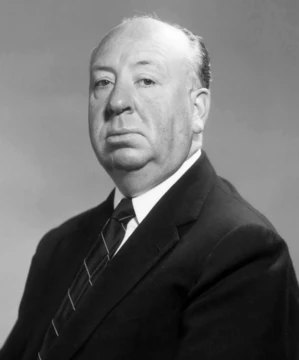
Vsevolod Pudovkin
Soviet film director who co-created the Kuleshov effect and developed montage theories.

Vsevolod Pudovkin (who later claimed to have been the co-creator of the Kuleshov experiment) was a Soviet film director, screenwriter, and actor. He described in 1929 how the audience of the Kuleshov effect experiment "raved about the acting ... the heavy pensiveness of his mood over the forgotten soup, were touched and moved by the deep sorrow with which he looked on the dead child, and noted the lust with which he observed the woman." Pudovkin's montage experiments, carried out in the late 1910s and early 1920s, formed the theoretical basis of Soviet montage cinema, culminating in famous films of the late 1920s by directors including Pudovkin himself.
- field
- Film director, screenwriter, actor
- known_for
- Montage theories, silent film trilogy (Mother, The End of St. Petersburg, Storm
Lore & Background
Vsevolod Pudovkin collaborated with Lev Kuleshov on the legendary cinematic research known as the Kuleshov effect, though when, where, and how it was created is not precisely known. Kuleshov and Pudovkin recounted differing versions, beginning soon after the work was done. Pudovkin later claimed to have been the co-creator of the experiment. In 1929, he described how the audience believed the expression on Ivan Mozzhukhin's face changed depending on the shot it was intercut with—a bowl of soup, a girl in a coffin, or a woman on a divan—showing hunger, grief, or desire, respectively, though the footage of Mozzhukhin was actually the same shot each time. The montage experiments carried out by Kuleshov and Pudovkin in the late 1910s and early 1920s formed the theoretical basis of Soviet montage cinema, culminating in films such as Pudovkin's *Mother* and *The End of St. Petersburg*.
Reader's Guide
Pudovkin's significance lies in his development of montage theories alongside Lev Kuleshov. The Kuleshov effect demonstrated that viewers derive more meaning from the interaction of two sequential shots than from a single shot in isolation. Kuleshov used the experiment to indicate the usefulness and effectiveness of film editing, believing that montage had to be the basis of cinema as an independent art form. The montage experiments carried out by Kuleshov and Pudovkin in the late 1910s and early 1920s formed the theoretical basis of Soviet montage cinema, culminating in the famous films of the late 1920s by directors such as Sergei Eisenstein, Vsevolod Pudovkin, and Dziga Vertov. These films included Pudovkin's *Mother* and *The End of St. Petersburg*, as well as *The Battleship Potemkin*, *October*, *Storm over Asia*, and *The Man with a Movie Camera*.
Did You Know?
- Pudovkin later claimed to have been the co-creator of the Kuleshov effect experiment.
- In 1929, Pudovkin described how the audience 'raved about the acting' of Ivan Mozzhukhin, not realizing the same shot was used each time.
- The Kuleshov effect was sometimes known as the Pudovkin effect prior to the 1960s.
- Pudovkin's films *Mother* and *The End of St. Petersburg* are among the famous Soviet montage films of the late 1920s.
- The montage experiments by Kuleshov and Pudovkin formed the theoretical basis of Soviet montage cinema.
More in Auteur Directors 1-24
Elsewhere in the Auteur Directors universe
Spotted an error? Know more?
This is a living reference — every entry is fact-audited, and reader corrections feed straight into our audit queue. Suggest an edit · See this site's audit record